Analog Photography
I recently found my love for analog photography — from an Olympus PEN to a Canon EOS 80D, and finally to film cameras and home development.
I recently found my love for analog photography.
The History
I started photography quite late — in 2012, with an Olympus PEN E-PL3. It had an APS-C sensor, interchangeable lenses, and a hot shoe for flashes and accessories.
That camera did its job well until I upgraded to the Canon EOS 80D in 2017, which became my main camera.
Around the same time, my friend Peter came up with the idea to try some analog cameras and develop film ourselves.
First Tries
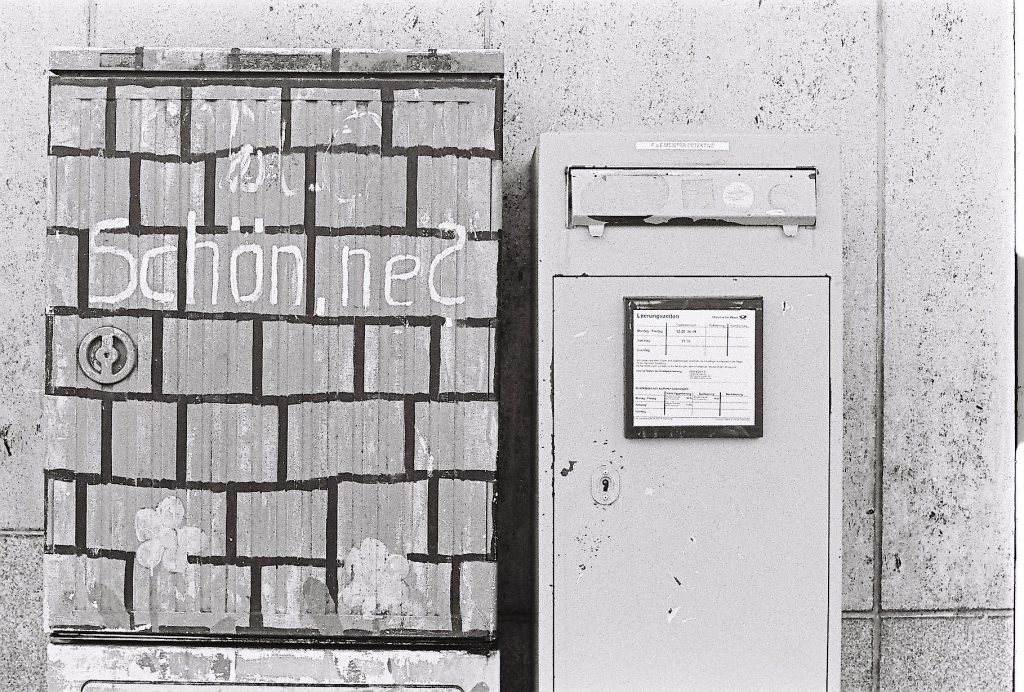
Although I was fairly certain the first analog results wouldn't look that great, we managed to produce some genuinely nice photographs. The process forces you to think differently — you have 24 or 36 exposures and no immediate feedback. Every frame costs something.
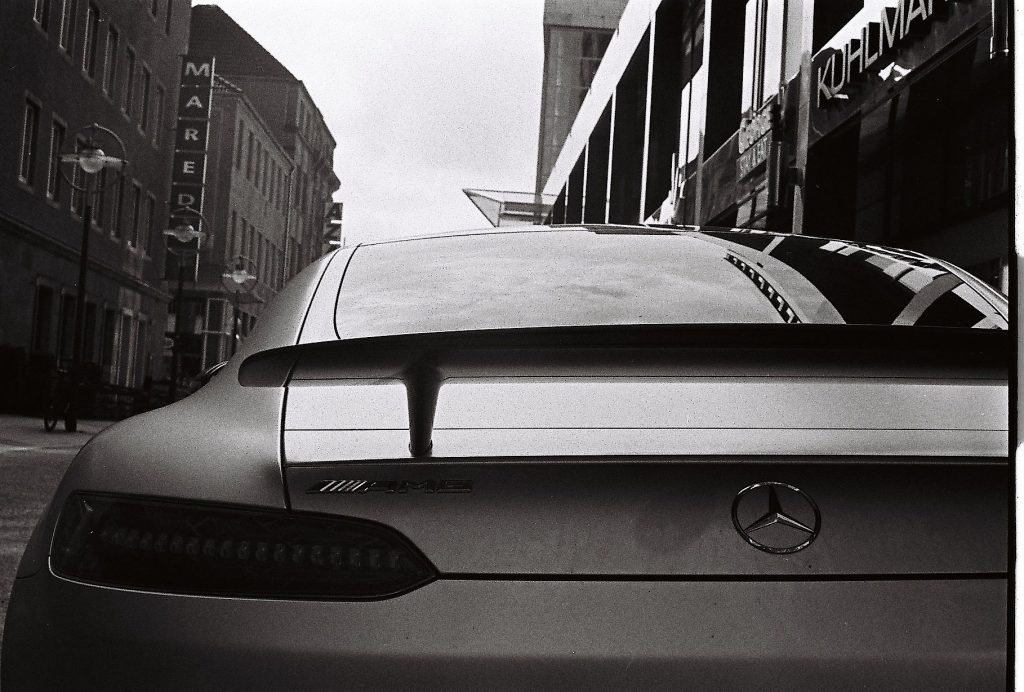
My absolute favourite from that first trip: a spoiler shot of a Mercedes SLS. The grain, the tonal range, the slight imprecision — all of it felt more real than a digital shot.
Why Analog?
The practical constraints turn out to be the point. When you're deciding whether to use one of 36 frames for a particular moment, you pay more attention. The slowness is the feature, not the bug.
The results also have a character that's hard to replicate digitally: more pronounced depth of field, a tonal quality in highlights and shadows, and — most importantly — the feeling of commitment to a shot.
Although analog photos need much more time to process (scanning, sometimes chemistry), I still love making photo trips with analog cameras. I'm also interested in getting into the darkroom side of things eventually.
If you've been on the fence about trying film: do it. Start cheap — a used 35mm camera costs almost nothing. The learning is fast and the results are often surprising.
Stay in the loop
New posts on AI transformation, agile organizations, and electromobility.
Frequently Asked Questions
What is analog photography?+
Analog photography uses photosensitive film to capture images chemically, rather than a digital sensor. Light exposes silver halide crystals on film, which are then developed using chemical processes to produce a negative or positive image. The term 'analog' distinguishes it from digital photography, where images are captured as electronic data.
What film camera is recommended for beginners?+
The Canon AE-1 Program and Pentax K1000 are widely recommended for beginners due to their reliability, availability of used units, and compatibility with a wide range of lenses. Fully automatic point-and-shoot cameras like the Olympus Stylus Mju series are also excellent for learning composition without worrying about exposure settings.
Can you develop film at home?+
Yes. Black-and-white film is straightforward to develop at home with a daylight tank, developer, stop bath, and fixer chemicals. Colour film (C-41 process) is also achievable at home but requires more precise temperature control. E-6 slide film is the most technically demanding and is best sent to a lab.